
To an outsider, trading and gambling can look identical. Both involve risking money on an uncertain outcome. Both can produce a rush when a position moves in your favor. And both can wipe out an account in a matter of minutes if handled carelessly.
But professional traders will tell you the resemblance stops at the surface. The difference isn't the presence of risk — it's how that risk is measured, managed, and repeated over time.
Gambling Is a Bet. Trading Is a Process.
A bet at a casino table has a fixed, unchangeable edge. The odds are baked into the game, and no amount of skill shifts them in your favor over the long run.
Trading works differently. A trader isn't accepting a fixed edge — they're constructing one. Position sizing, entry and exit criteria, and risk-per-trade limits are all variables a trader controls. Change those variables, and the expected outcome changes with them. That's not true at a roulette wheel.
Repeatability Is the Real Dividing Line
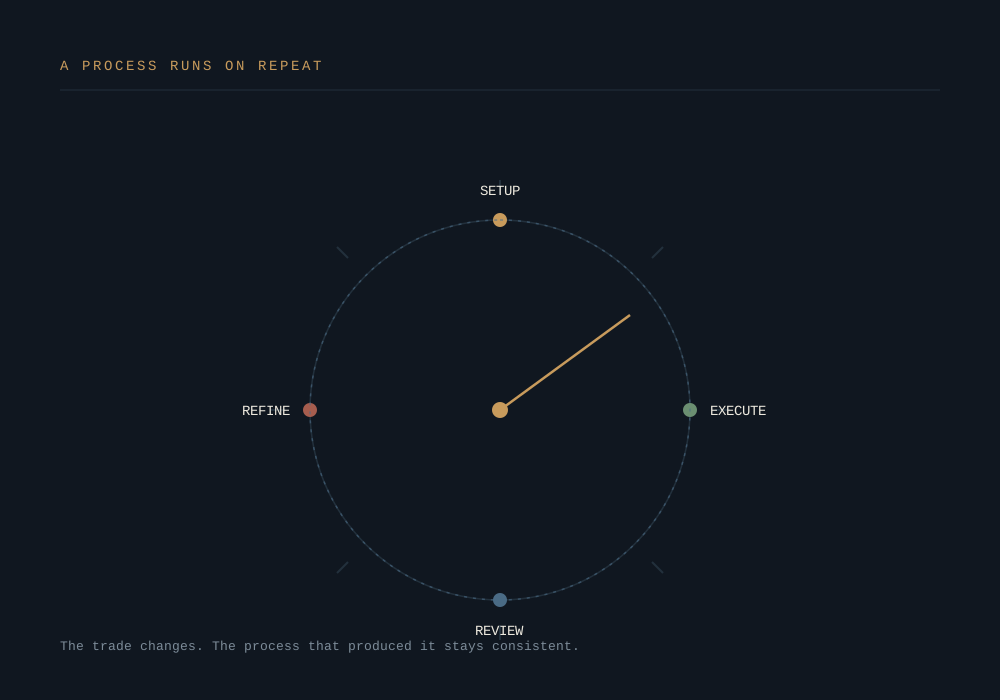
Ask a gambler why they won and they'll usually point to luck. Ask a professional trader why they won — or lost — and they should be able to walk you through a process: what the setup was, what the risk parameters were, and whether the trade followed their plan regardless of the result.
That's the real test. A profitable trade executed outside of a trader's process is closer to a lucky bet than a trading decision, even if it made money. A losing trade executed inside a sound process isn't a failure — it's simply one outcome in a distribution the trader already accounted for.
Risk Management Is the Line, Not the Prediction
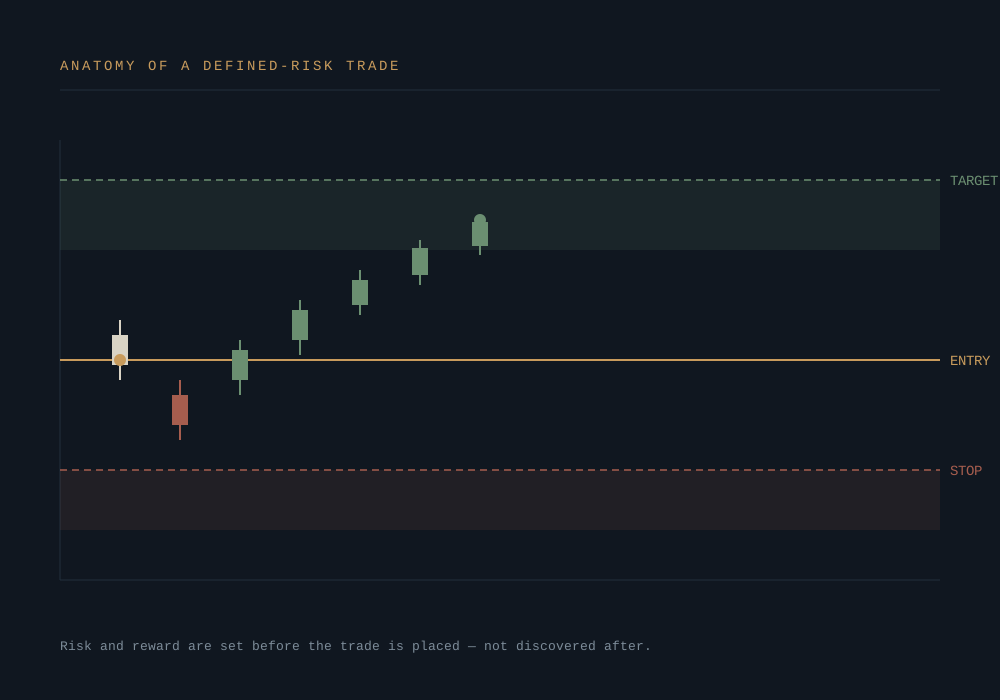
New traders often assume the goal is to predict the market correctly more often than not. Experienced traders know the goal is closer to the opposite: assume you'll be wrong a meaningful percentage of the time, and structure every position so that being wrong doesn't threaten the account.
This is where the two activities diverge most clearly. Gambling has no equivalent to a stop-loss, no position sizing model, and no capital allocation framework. Trading, done professionally, is built around all three.
Why This Distinction Matters
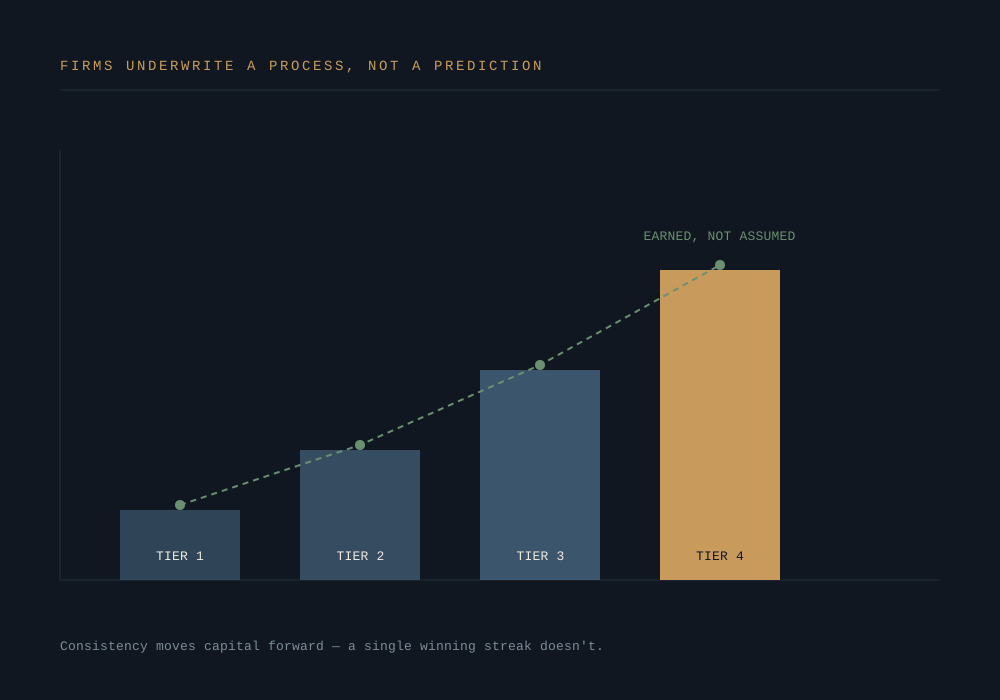
For anyone evaluating whether they're ready to trade — or trade with a firm's capital — this distinction is more than semantic. It's the difference between an activity where the outcome is out of your hands and one where the process is entirely within your control, even when individual outcomes aren't.
Firms that fund traders are, in effect, underwriting a process, not a prediction. That's why risk management, consistency, and capital allocation tend to matter more to a funding evaluation than any single winning streak.